Why Solid Color TPE Yoga Mats Are Becoming a Practical Choice for Yoga Brands
2026-08-31 15:48:02
Yoga mat buyers are no longer looking only at thickness, color, and price. For yoga studios, fitness retailers, wellness brands, and e-commerce sellers, the material, surface feel, product consistency, customization options, and ability to control inventory are becoming equally important.
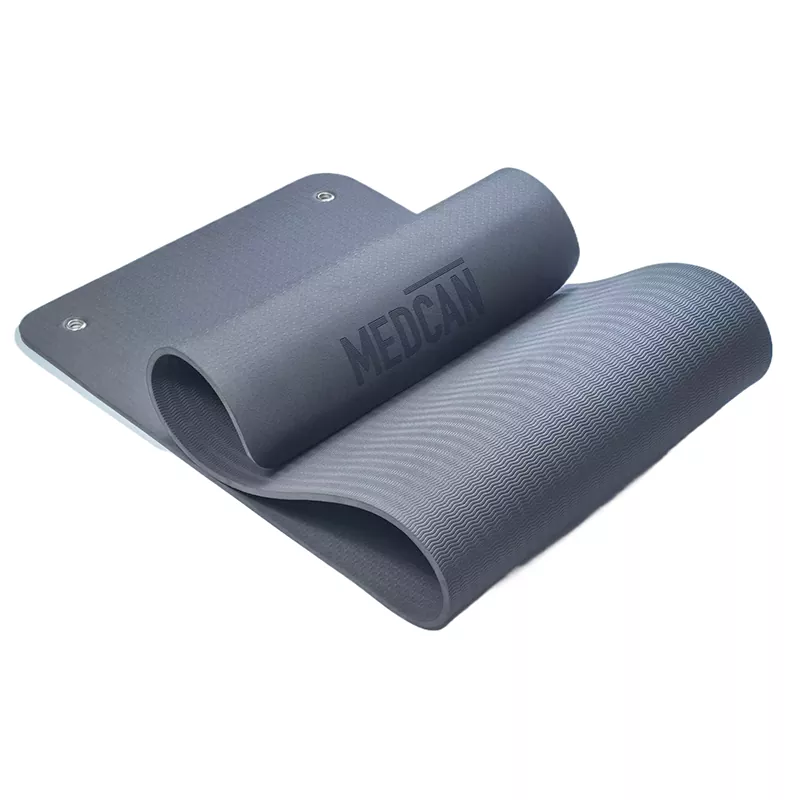
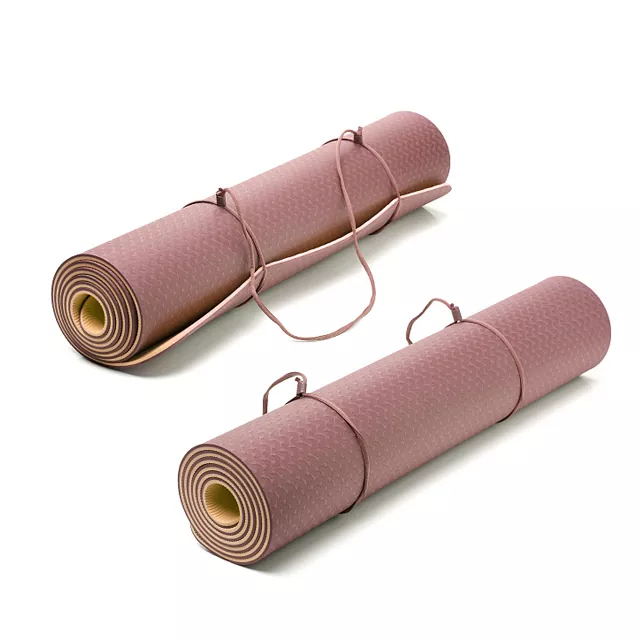
Solid Color TPE Yoga Mats are particularly suitable for this market. Their clean appearance works well with minimalist fitness spaces and private-label product lines, while TPE provides a balance of cushioning, flexibility, low weight, and everyday durability. For brands that need several thicknesses, colors, sizes, or logo options without developing a completely new product, a TPE yoga mat can also provide a practical starting point.
For buyers sourcing yoga mats from China, the more important question is not simply whether a mat looks good in a product photograph. It is whether the supplier can consistently control material quality, dimensions, surface performance, customization, packaging, and delivery across repeated orders.
What Makes TPE Different From Common Yoga Mat Materials?
Thermoplastic elastomer, commonly known as TPE, is widely used in fitness and yoga products because it combines rubber-like elasticity with the processing advantages of thermoplastic materials.
Compared with traditional PVC yoga mats, TPE mats can offer a lighter construction and a softer, more flexible feel. They are also attractive to brands looking for recyclable material options and a more contemporary positioning for their fitness products.
However, material selection should always match the intended use. A yoga studio with heavy daily traffic may prioritize abrasion resistance and dimensional stability, while a travel-oriented retail product may place more emphasis on weight and portability. Buyers should therefore discuss the actual application with the manufacturer before fixing the material structure and thickness.
How to Choose the Right Yoga Mat Thickness
Thickness has a direct effect on cushioning, stability, portability, and the overall feel of the mat. There is no single thickness that works for every customer.
3mm–4mm: Lightweight and Stable
Thin yoga mats are easier to carry and provide a relatively direct connection with the floor. They can be suitable for yoga styles where balance and stability are important, as well as for customers who frequently travel with their mats.
5mm–6mm: A Versatile Everyday Option
This range provides a useful balance between cushioning and stability. It is often a practical specification for general yoga, Pilates, stretching, and home workouts.
8mm–12mm: More Cushioning
Thicker mats provide additional cushioning for users who prefer a softer surface. They can be considered for low-impact exercise, stretching, rehabilitation-oriented workouts, or customers who simply prefer more support under their hands, knees, and feet.
15mm–20mm: Maximum Softness
Very thick mats are more focused on cushioning than close-to-the-floor stability. Before selecting this specification for a commercial product line, buyers should test the finished sample because increased thickness changes the way the mat behaves during standing poses and balance movements.
Why Solid Colors Work Well for Private Label Yoga Products
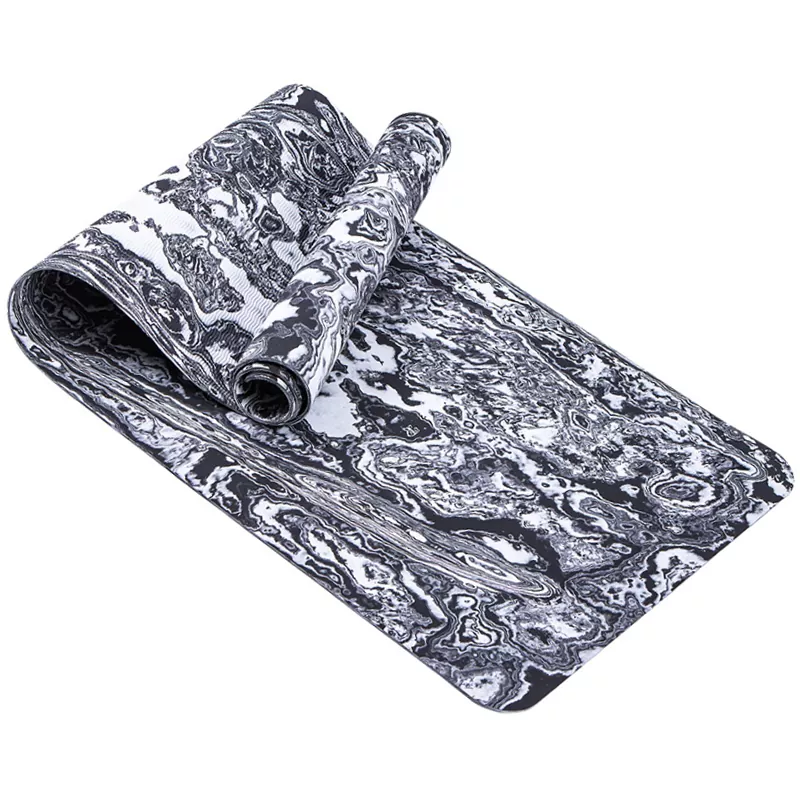
Patterns can attract attention, but solid colors offer a different commercial advantage: they are easier to integrate into a consistent brand identity.
A retailer can develop a collection around several coordinated colors, while a yoga studio can select mats that match its interior design. E-commerce brands can also use the same basic product structure for different color SKUs instead of developing a completely different mat for every design.
Solid colors are particularly suitable for minimalist, wellness, meditation, Pilates, and professional fitness positioning. The simpler visual design also leaves more room for a brand logo or other customization without making the product look overcrowded.
What Customization Options Should Yoga Mat Buyers Ask For?
Customization is more than printing a logo on an existing mat. For B2B buyers, it is useful to determine exactly which parts of the product can be customized before requesting a quotation.
Size: Custom length and width for different markets or applications.
Shape: Standard rectangular mats as well as selected custom shapes.
Thickness: Different thicknesses for different user groups and price levels.
Color: Stock colors for faster production or customized colors for private-label collections.
Logo: Laser engraving, hot pressing, silk-screen printing, or other suitable methods.
Packaging: Custom labels, boxes, sleeves, polybags, and other retail packaging options.
Full design: Custom product appearance when a standard solid-color design is not sufficient.
The best customization method depends on the logo size, artwork, color, order quantity, target market, and required appearance. A supplier should confirm the production method with a sample rather than promising that every design can be reproduced identically.
What Should Importers Check Before Ordering TPE Yoga Mats?
A low unit price does not necessarily mean a low procurement cost. Yoga mats are large products, and differences in material density, thickness, packaging volume, defect rate, and shipping efficiency can affect the final landed cost.
Before placing an order, buyers should request a complete specification sheet and confirm the following points:
Actual mat dimensions and acceptable dimensional tolerance
Material composition and material structure
Actual thickness rather than nominal thickness only
Surface texture and non-slip requirements
Color matching method and acceptable color tolerance
Logo application method and artwork requirements
Packaging dimensions and carton quantity
MOQ for stock and customized colors
Sample approval process
Production lead time and monthly production capacity
Available test reports and compliance documentation
These details become especially important when a buyer plans to reorder the same product. A specification that is not clearly defined at the beginning can lead to differences between the first and second production batches.
Stock Colors or Custom Colors: Which Is Better?
The answer depends on the purchasing strategy.
Stock colors are usually the easier option for testing a new product. They can reduce the complexity of color development and may support a lower MOQ. This is useful for small retailers, new e-commerce brands, and buyers who want to validate demand before committing to larger quantities.
Custom colors make more sense when the yoga mat is part of an established brand identity. A specific color palette can help distinguish the product from generic mats and create consistency across yoga mats, blocks, straps, bags, and other fitness accessories.
For new product launches, a practical approach is to start with several proven stock colors, measure sales performance, and then introduce customized colors based on actual demand.
Why MOQ Matters for Yoga Mat Inventory
Yoga mats take up considerably more warehouse space than their unit price might suggest. Ordering too many variations at the beginning can create slow-moving inventory, especially when each color, size, and thickness is treated as a separate SKU.
A supplier that supports small-batch customization can therefore be valuable for brands entering a new market. For example, buyers can test several colors and thicknesses in smaller quantities before increasing the volume of the best-performing SKU.
For the BG-SC01 model, Boga Sports states an MOQ of 100 pieces for stock colors. The supplier also lists a monthly supply capacity of up to 300,000 pieces, which provides room for both smaller market tests and larger recurring orders.
Non-Slip Performance Should Be Tested, Not Assumed
“Non-slip” is one of the most common claims used in yoga mat marketing, but actual grip depends on the surface texture, material formulation, contact pressure, moisture, floor condition, and type of exercise.
A buyer should test a sample under realistic conditions rather than evaluating grip only by touching the dry surface with a hand.
For commercial products, useful tests can include standing poses, transitions between movements, Pilates exercises, stretching, and repeated use on different flooring surfaces. If the target market includes hot yoga or high-sweat workouts, testing should also consider performance under increased moisture.
This approach helps brands avoid choosing a mat based solely on appearance and discovering performance problems after a large production order has already been shipped.
How Yoga Mat Quality Control Affects Repeat Orders
For B2B buyers, consistent production is often more important than an impressive first sample. A supplier needs to reproduce the approved specification across multiple production batches.
Quality control for TPE yoga mats can cover raw material inspection, thickness measurement, dimensions, surface appearance, color consistency, logo quality, edge finishing, packaging, and finished-product inspection.
Color control deserves particular attention for solid-color products. When the entire surface has one dominant color, even a relatively small difference between batches can be noticeable. Buyers with established brands should therefore keep an approved color reference and communicate the acceptable tolerance to the manufacturer.
Compliance Documentation for International Yoga Mat Buyers
When importing fitness products, documentation requirements vary according to the destination market and the buyer's sales channels. Instead of relying on general claims such as “eco-friendly” or “international quality,” buyers should request the actual supporting documents relevant to their market.
Boga Sports lists BSCI, ISO, and SGS test documentation for the BG-SC01, and its product information also references IEC 62321 and REACH-related compliance requirements.
Importers should check the original reports, product scope, test items, issuing organization, and validity where applicable. The documentation should correspond to the actual material and product being purchased.
Where Can Solid Color TPE Yoga Mats Be Used?
A solid color TPE yoga mat is not limited to traditional yoga classes. Its combination of cushioning, portability, and customizable specifications makes it suitable for several commercial applications.
Yoga studios: A coordinated color range can support a consistent studio environment.
Pilates studios: Different thickness options can be matched to floor exercises and stretching.
Fitness centers: Durable mats can be supplied for general exercise areas.
Hotels and wellness centers: Customized colors and logos can reinforce the property brand.
Retailers: Multiple colors and sizes can create a broader product range.
E-commerce brands: Private-label customization allows the mat to become part of a differentiated product collection.
Corporate wellness programs: Logo customization can turn the mat into a branded fitness product.
Why Work With a Yoga Mat Manufacturer Instead of a Trading Company?
When the order involves custom sizes, colors, thicknesses, logos, or packaging, direct communication with a manufacturer can simplify the development process.
A manufacturer can typically provide more direct information about material selection, production limitations, tooling, printing methods, sample development, quality inspection, and production scheduling. This becomes increasingly important as order volume grows or the buyer develops several related SKUs.
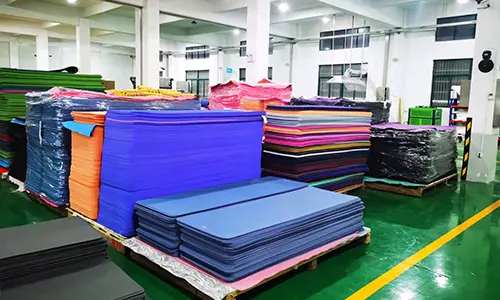
Boga Sports identifies itself as a China-based yoga mat manufacturer with more than 10 years of experience and a production capacity of up to 300,000 pieces per month. Its stated export markets include the United States and Europe, with full customization and design-based customization available for B2B customers.
A Practical Buying Checklist for TPE Yoga Mats
If you are sourcing solid color TPE yoga mats for your own brand, distributor business, studio, or online store, the following checklist can help reduce unnecessary back-and-forth during supplier evaluation.
Define the target user and primary application.
Select the preferred thickness range based on actual use.
Confirm standard or custom dimensions.
Choose stock colors or provide a Pantone/color reference.
Confirm logo artwork and printing or embossing method.
Request a physical sample before mass production.
Test grip, cushioning, odor, flexibility, and dimensional stability.
Review available test reports and compliance documentation.
Confirm MOQ for each color and specification.
Calculate packaging volume and shipping cost, not only unit price.
Approve a final production specification before placing the bulk order.
Why BG-SC01 Can Be a Flexible Starting Point for Private Label Yoga Mats
The BG-SC01 Solid Color TPE Yoga Mat is designed around a relatively broad customization range. Available thicknesses are listed from 3mm to 20mm, with multiple regular sizes, shapes, colors, logo methods, and packaging options.
Boga Sports states that 16 colors are kept in stock year-round and that stock-color orders can start from 100 pieces. This combination can be useful for buyers who want to test several market variations without immediately committing to a large custom-color inventory.
For established brands, the same product platform can also be developed into a more complete private-label range by combining different thicknesses, sizes, colors, surface treatments, logos, and packaging formats.
The Right Yoga Mat Starts With the Right Specification
Choosing a yoga mat for commercial use is not simply a matter of finding an attractive design at the lowest price. Material, thickness, grip, dimensions, color consistency, customization, compliance documentation, packaging, MOQ, and production stability all influence the success of the final product.
Solid Color TPE Yoga Mats offer a straightforward foundation for brands that want a clean product appearance with flexible specifications. For buyers entering the market, a small-batch test using stock colors can reduce inventory risk. For established brands, custom colors, logos, sizes, and packaging can turn a standard TPE mat into a more distinctive private-label product.
If you are sourcing TPE yoga mats for a retail brand, yoga studio, fitness business, or e-commerce store, discussing your target market, required specifications, expected quantity, and customization requirements with the manufacturer before sampling is the best way to arrive at a commercially viable product.
We use cookies to offer you a better browsing experience, analyze site traffic and personalize content. By using this site, you agree to our use of cookies.
Privacy Policy